
I thought today would be a good day to talk about what I am calling the “Scrum Bubble.” There seems to be just tons of heat on the Scrum and certifications topic going on lately. From my original post on Scrum for the Money to Ron Jeffries post on Certifications to Uncle Bob’s post on Certifications, to David Starr’s post on Certifications.\n\nHere is the thing about a dead horse. Well, you just can’t really know it’s dead. I mean, sure its eyes are closed. Sure, it’s lying there in a bloody mess on the floor, but is it really dead? The only sensible thing to do is beat it just one more time, just to make sure. Let’s kill that horse good!\n\n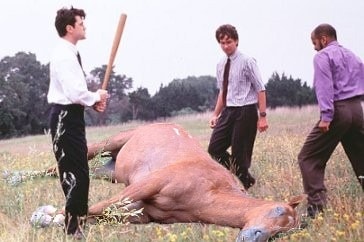 There is an underlying problem here… I call it\n\n
THE SCRUM BUBBLE
\n\nRemember the .com era. Ah, wasn’t that great.\n\nHow about that whole stock market always rises decade…\n\nOh, and don’t forget the housing boom. The housing boom was great!\n\nBut then… What happened?\n\nOh yes, we got nuked back to the stone age.\n\nThe same thing is happening with Scrum. Certification proliferation is fueling it. What happens when everyone in the software development world is a Certified Scrum Master, and we are still building shitty software? What then?\n\n
BOOM!
\n\nIt implodes, just like a bubble. That bubble will burst and when that happens it is going to take Agile right along with it.\n\nA wise man once said\n\n
You can shear a sheep many times, but skin him only once.
\n\nWhen you arm people with useless certifications and send them into organizations to go and conquer the beast of software development, you are skinning that sheep. All the consultants that are milking so much money out of Scrum will eventually find that tit dry.\n\n
Scrum is good
\n\nIt is. It is really a great tool for building software. It makes sense, it is practical and if you apply it correctly you will get a good result. The problem is applying it correctly. The problem is it isn’t addressing the other things that need to change to really be able to do Agile development. (Which is why I suggested a new process Kanbanand that does address those things.)\n\nTraining and consultants are good also. Getting good hands on training from someone who really knows what they are doing can accelerate you on your learning curve like nothing else. Consultants who have already been through a process and can look at things with a fresh eye can be invaluable in making positive changes in an organization.\n\nThe problem is Scrum is not the end-all-be-all to software development. It is not the silver bullet that kills death march zombies. It is a tool. I really like Henrik Kniberg’s approach to Scrum and Kanban, where he talks about each being a tool to help you develop software. In his book, (buy it this book is really good), he asks the question, which is better a fork or a knife? A pretty silly question to ask, which illustrates the point well.\n\nWhen we hype up Scrum to the point of rock star stardom and then use it as a tool to extract large amounts of money out of the software development eco systems quickly, we are creating a bubble. Just like any bubble, we should expect it to burst if we keep inflating it.\n\n
There are a lot of good people in Scrum
\n\nThere are plenty of good people that have a sincere passion for the craft that are really investing into Scrum because they know it is a good way to deliver value to customers, and it is a simple framework that can be easily taught and implemented. There are plenty of people like David Starr and Tobias Mayer that are honestly trying to do good in the world of software development and using Scrum to do it. I honestly believe that.\n\nBut, there are plenty of other people that are riding on the success of Scrum and building careers out of being a certificate factory. We have to take away the keys to the kingdom from those people if we want to avoid destroying the good that others are doing in the name of Scrum.

Related Articles

7 Ways to Prevent Daily Burnout as a Programmer
It’s important to prevent daily burnout as a programmer, especially because the job can be quite overwhelming at times. Here’s…
How To Develop an Effective Software Development Life Cycle
The early 1940s to 1960s was the beginning of the era of the information system and its development. Before that,…

Tips To Create an Effective Agile Communication Plan
In software development, many technological experts consider it essential to follow the agile methodology, which is a continuous iterative process…